
 |
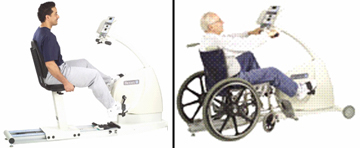
| Picture of people using a cycle ergometer |
Cyclocentric exercise combines concentric and eccentric muscle strengthening during cycling. While concentric muscle strengthening occurs when the muscle being strengthened is moving to a shorter length, eccentric muscle strengthening happens when the muscle being strengthened is lengthening. An easy example of concentric and eccentric muscle strengthening is a bicep curl. When you curl the weight up, your biceps are shortening, so you are concentrically strengthening them. When you lower the weight back down, the biceps are lengthening, so you are eccentrically strengthening them.
By using a cycle ergometer, you are strengthening your lower-body muscles in these two different ways. The result is an increased focus on the main extensor muscles. These muscles include the quadriceps, which extend the lower leg; the gluteals, which extend the hip; and the plantarflexors, which assist in push-off during walking. Cyclocentric exercise is a safe way to help build strength and endurance in persons with and without disabilities.