
- Growth of Paralympics Helps Change the World's View of Disability
- Effects of exercise training on frailty in community-dwelling older adults: Results of a randomized, controlled trial
- Providing Inclusive Recreation Opportunities: The Cincinnati Model
- A community-based fitness and mobility exercise program for older adults with chronic stroke: A randomized controlled trial
- Aquatic Exercise for Children with Cerebral Palsy
- Activity Levels and Body Mass Index of Children
- Community Voice: Program Spotlight: Right Fit - Sport, Fitness & Wellness
- Rehab and Community Physical Activity - When and Where Shall the Two Meet?
- Table Tennis at the National Veterans Wheelchair Games
- 2008 International Walk to School Day - Solomon Elementary School, Chicago, Illinois
- 140 Characters and the Power of the Collective Voice
- The Social Dimension of Fitness Centers
- Do As I Say Not as I Do: Not the Right Attitude for a Rehab Conference
- Physical Training in Children with Osteogenesis Imperfecta.
- Community Voice: RIC Athlete Profile - Mickey Bushnell
- Community Voice: Program Spotlight - RIC Caring for Kids
- 2009 Sports Day at Solomon School
- Basketball
- Hockey-Wheelchair
- Goalball
- Spirit and Success in Motion: A Celebration of Sports and Life Achievement of People with Disabilities
- Physicians Need to Refer Their Patients to NCHPAD
- Sled Hockey
- Kids with ADHD Need to Be On the Move
- Barriers associated with exercise and community access for individuals with stroke
- Community Spotlight: ShowMe Aquatics, St. Louis, Missouri
- Community Voice: Cycling to New Heights: Greta Neimanas
- Murderball - See it!
- Music and Dance Can Pave the Road to Higher Levels of Physical Activity Among Youth with Disabilities
- Walk to School Day Celebrates National Efforts to Promote More Walkable (Wheelable), Active Communities
- Health Promotion for People with Disabilities: The Need for a Transitional Model in Service Delivery
- Children with Disabilities and Obesity
- Principles for Adapting Activities in Recreation Programs and Settings
- BulletBall: A Therapeutic Table Sport by Inclusion Sports
- Exercise Reduces Secondary Conditions in Children with Cerebral Palsy
- Adapted Physical Activities for the Intellectually Challenged Adolescent: Psychomotor Characteristics and Implications for Programming and Motor Intervention
- What to Know Before You Go: The Big Questions to Ask Before Arriving at Your "Accessible" Recreation Destination
- Wellness Programming for Independent Living Centers
- Obesity Rates in Youth with Disabilities
- Absence of People with Disabilities Using Local Parks
- A Holiday Physical Activity Gift for Children with Disabilities
![]() |
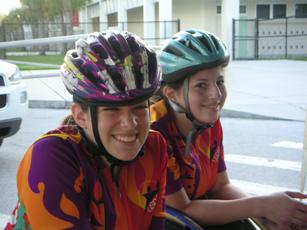
| Two girls who use wheelchairs are dressed in colorful cycling shirts and helmets as they smile at the camera. |
Play is to the child what thinking, planning, and blueprinting are to the adult, a trial universe in which conditions are simplified and methods exploratory, so that past failures can be thought through, expectations tested.
Erik Erikson, 1902-1994
Erikson was an American psychoanalyst specializing in child psychology. In his most influential work, Childhood and Society (1950), he divided the human life cycle into eight psychosocial stages of development. His later works deal with ethical concerns in the modern world (Friedman, 1999).
In 1996, the Surgeon General's Report on Physical Activity and Health documented research that indicated men and women of all ages and abilities can improve their quality of life through regular, moderate physical activity. The recently published 2008 Physical Activity Guidelines for Americans describe the types and amounts of physical activity that offer substantial health benefits to all Americans, including those with disabilities. These science-based guidelines were designed to help individuals with disabilities aged 6 and older improve their health through appropriate physical activity. Although there are public policies in place to safeguard the educational and civil rights of people with disabilities, individuals, particularly youth, face limited access to the range of activities, programs, and services that promote healthy living. Through access to well-researched information regarding conditions, methods of preventive health efforts, and participation in physical exercise and sports, the benefits for youth with disabilities are now being recognized (Wells, 1990).


