
- Dr. Bob Segalman, President & Founder, Speech-to-Speech
- The Next Frontier of the ADA: Fitness Facilities
- Physical Activity Participation Among Persons with Disabilities: Barriers and Facilitators
- Play Areas Designed for Access
- Designing for Inclusive Play: Applying the Principles of Universal Design to the Playground
- Accessible Gardening
- New Study Finds Low Accessibility of Physical Activity Facilities
- Community Spotlight: Seattle Children's PlayGarden
- Baker Wetlands: Making Outdoor Recreation Accessible
- Cameras Help Researchers Spot Access Barriers
- Opening Doors: Why Fitness Facilities Should Make Room for People With Disabilities
- Inclusive Play for ALL Children: The Opportunities are Boundless!
- Physical Activity, Mobility Equipment, and Access
- AIMFREE Manuals
- MODEL FACTSHEET
- Using a Fitness Center Does Not Have to be an Exercise in Frustration: Tips for People with Mobility and Visual Disabilities
- Don't Stay on the Sidelines: Find an Accessible Exercise Facility
- Absence of People with Disabilities Using Local Parks
Cindy Burkhour, M.A., CTRS, CLP
![]() |
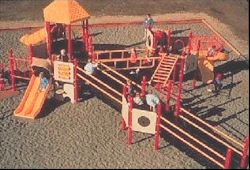
| An access ramp passes through the floor plan of this playground |
Children are not the only benefactors of accessible design in play areas. Parents with disabilities need to move around the playground in order to support and interact with their children as they play. Accessible routes in and around the play area also help parents without disabilities, particularly those pushing younger siblings in strollers, and grandparents playing with their grandchildren. Good universal design is a benefit to adults and children.
Because children with disabilities are increasingly included in neighborhood schools and community recreation programs such as summer playground programs, accessible play areas are a necessity.


