

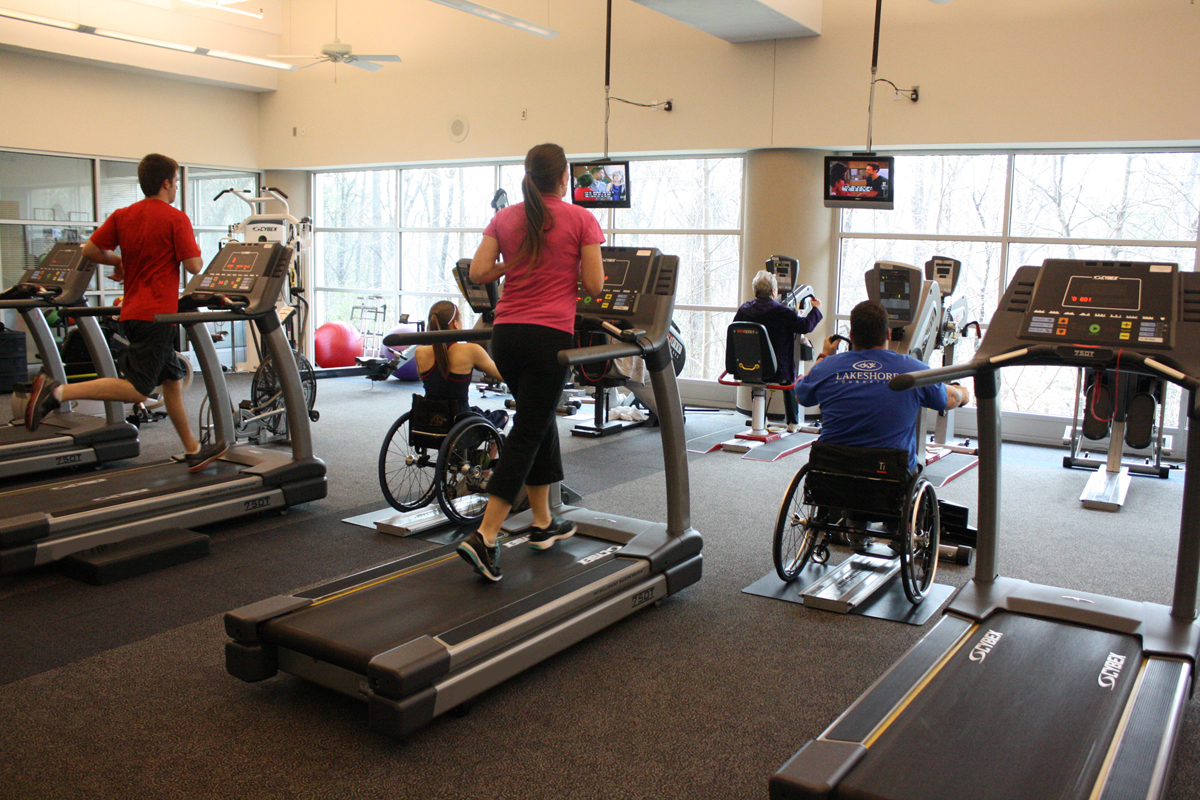
Being physically active is one of the most important steps that Americans of all ages can take to improve their health. The 2008 Physical Activity Guidelines for Americans provides science-based guidance to help Americans aged 6 and older improve their health through appropriate physical activity. This may be even more important if you have a disability, since people with disabilities have a tendency to live less active lifestyles.
The following is a list of Physical Activity Guidelines for Adults with Disabilities from the U.S. Department of Health and Human Services:
- Adults with disabilities should strive to get at least 150 minutes a week of moderate-intensity, or 75 minutes a week of vigorous-intensity, aerobic activity, or an equivalent combination of moderate- and vigorous-intensity aerobic activity. Aerobic activity should be performed in episodes of at least 10 minutes, and preferably, it should be spread throughout the week.
- Adults with disabilities, who are able to, should also do muscle-strengthening activities of moderate or high intensity that involve all major muscle groups on 2 or more days a week. These activities provide additional health benefits.
- When adults with disabilities are not able to meet these guidelines, they should engage in regular physical activity according to their abilities and should avoid inactivity.
- Adults with disabilities should consult their health-care provider about the amounts and types of physical activity that are appropriate for their abilities.
Also, according to the U.S. Department of Health and Human Services Physical Activity Guidelines for Active Children and Adolescents, children and adolescents with disabilities are more likely to be inactive than those without disabilities. Youth with disabilities should work with their health-care provider to understand the types and amounts of physical activity appropriate for them. When possible, children and adolescents with disabilities should meet the suggested guidelines. When young people are not able to participate in the amount and level of physical activities necessary to meet the Guidelines, they should be as active as possible and avoid being inactive.
For more information about physical activity guidelines, please visit the U.S. Department of Health and Human Services (HHS) 2008 Physical Activity Guidelines for Americans at http://www.health.gov/paguidelines/default.aspx or for a PDF version visit http://www.health.gov/PAguidelines/pdf/paguide.pdf.