
- Introduction
- Background on Access to Recreation Facilities & Programs
- Where To Look
- NCHPAD
- Community Guides
- Travel Guides
- Convention and visitors bureaus
- National and state parks, forests, and wildlife refuges
- Park and recreation departments
- Schools and local colleges
- Community centers and Ys
- Special interest groups and private clubs
- Who to contact
- What to ask
- General Questions
- Facility-specific questions
- After your visit
- Effects of exercise training on frailty in community-dwelling older adults: Results of a randomized, controlled trial
- A Paradigm Shift in Youth Sports and Recreation Is Needed to Include More Youths with Disabilities and Health Conditions Including Obesity into the Mainstream of Sports and Recreation in America
- Access Board Issues New Accessibility Guidelines
- Play Areas Designed for Access
- Providing Inclusive Recreation Opportunities: The Cincinnati Model
- Parks and Recreation Budget Cuts "Phase" Accommodation
- Municipal Partners for Inclusive Recreation: A Model of Success in St. Louis County
- Open Spaces: No Bounds to Outdoor Recreation
- A community-based fitness and mobility exercise program for older adults with chronic stroke: A randomized controlled trial
- Museums, Zoos and Aquariums - Enhancing Accessibility
- Rehab and Community Physical Activity - When and Where Shall the Two Meet?
- 2009 All Abilities Team - Chicago Breast Cancer 3-Day
- No Limits on Fitness At Crosstrainers Gym
- What do you know about the ADA?
- Do As I Say Not as I Do: Not the Right Attitude for a Rehab Conference
- Responses to the Accessibility Problem in the Photo - 4
- Focus on Secondary Condition Prevention: Universal Design and Accessibility Issues that Impact Health and Function for All
- Fitness Vacations
- Therapeutic Recreation Services
- Physical Activity, Leisure and Recreation for Youth with Disabilities: A Primer for Parents
- Summary of the National Survey on Recreation and the Environment
- Physicians Need to Refer Their Patients to NCHPAD
- Planning for Inclusion: Implementing an Accessibility Management Program in a Parks and Recreation Business Model
- Community Spotlight: Seattle Children's PlayGarden
- Strong Headwind on the Road to Accessible Fitness and Recreation
- Secondary Condition Prevention: Building Your Own "Health Empowerment Zone"
- Choosing a Fitness Center
- Active and Inclusive Family Vacations
- Can You Identify the Accessibility Problem In this Photo - 1?
- Community Spotlight: ShowMe Aquatics, St. Louis, Missouri
- Barriers associated with exercise and community access for individuals with stroke
- Including People with Disabilities in Challenge Course Operations
- Making A Splash: Inclusion of People with Disabilities in Aquatic Venues
- Walk to School Day Celebrates National Efforts to Promote More Walkable (Wheelable), Active Communities
- Finding a Fitness Facility: A Personal Experience
- Opportunities to Advocate for Inclusion in Fitness and Recreation
- Health Promotion for People with Disabilities: The Need for a Transitional Model in Service Delivery
- MODEL FACTSHEET
- Traveling Smarts: Working Out Your Mind and Body
- Principles for Adapting Activities in Recreation Programs and Settings
- Answers to the Accessibility Problem in the First Photo
- The Rationale and Benefits of Sport Participation for Youth of All Abilities
- Adoption of the Revised ADA Standards for Accessible Design What it Means to Recreation Facilities
- Wellness Programming for Independent Living Centers
- Absence of People with Disabilities Using Local Parks
- Retrofitting an Accessible Whitewater Park
By Susan Ostby and Jennifer Skulski, National Center on Accessibility
Every day, millions of people participate in recreational activities. Recreation activities offer avenues for people with disabilities to improve their health, relationships, and enjoyment of life. In fact, recreational pursuits centered on physical activity and social engagement can help prevent secondary health problems such as obesity and depression. Physical activity during recreation promotes weight loss, strength, flexibility, motor skills, and self-confidence. Socializing during recreation enables people to create new relational bonds and strengthen old ones, leaving the individual with an enhanced self-image and expanded social skills.
![]() |
|
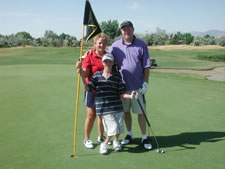
Andy and his parents pose for a photo after a round of golf. Photo courtesy of the National Alliance for Accessible Golf.
|
For people with disabilities, participating in recreation can have a lasting impact that significantly improves their quality of life. However, the accessibility of a recreation program or facility can affect the individual's experience and overall satisfaction with the experience. One of the most frequently asked questions to the National Center on Health, Physical Activity, and Disability (NCHPAD) and the National Center on Accessibility (NCA) is, 'Where can I find accessible recreation opportunities?' This article will guide visitors in their search for accessible recreation facilities and programs. We will discuss how you can conduct initial searches for programs, who to contact, and what questions to ask before arriving at your recreation destination.


